AI and Bluetooth Hearing Aids
Hearing aid technology has changed dramatically over the past few decades. Older analog devices worked by boosting every sound in the room at once, with no way to tell a voice apart from a slamming door or a humming air conditioner. Digital hearing aids solve that problem with a small onboard processor that reads incoming sound and reshapes it before it reaches your ear. That processing is what lets a modern device quiet down clutter, bring speech forward, and shift automatically as you walk from a calm living room into a noisy family dinner — no dials or switches required.
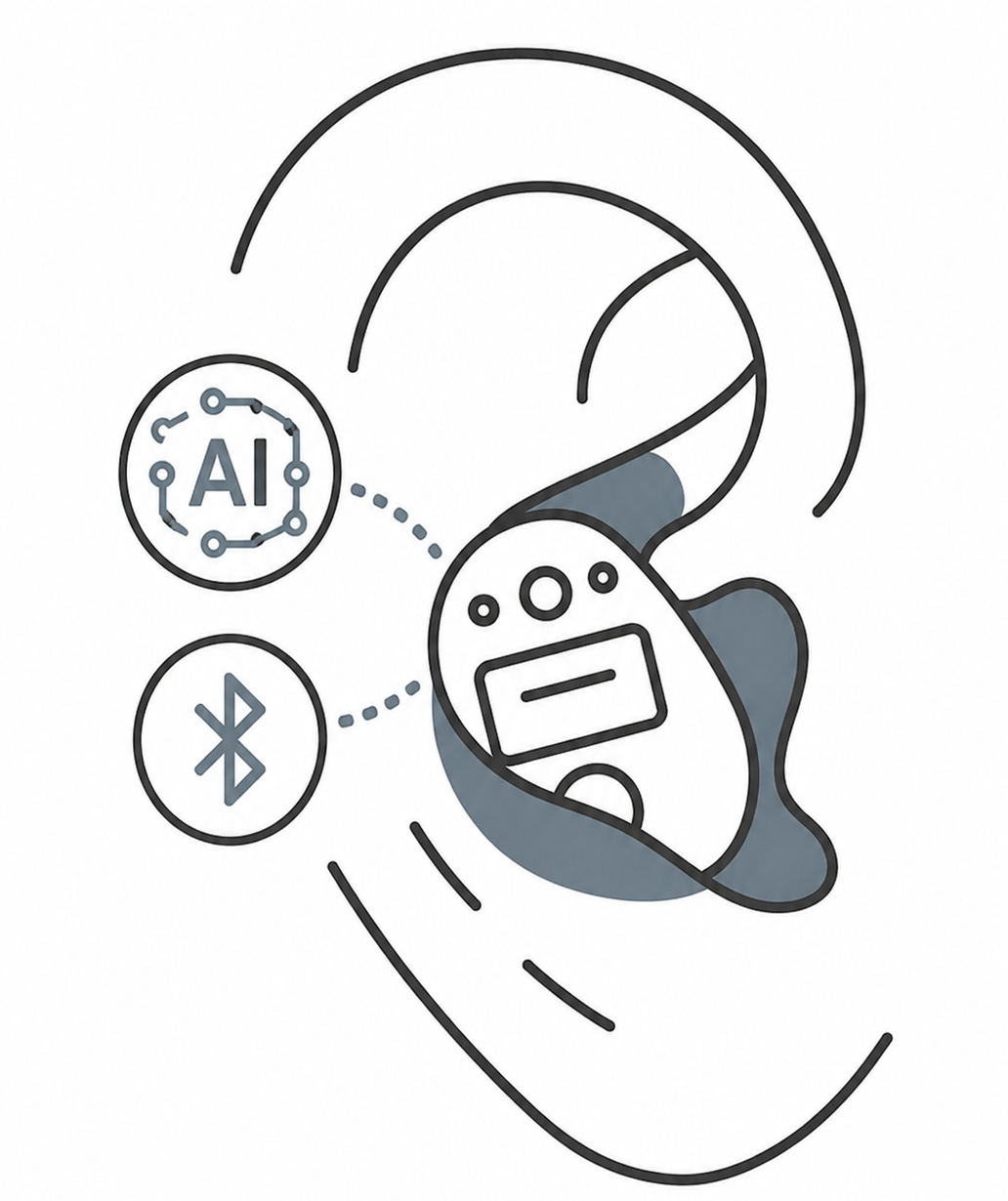
The most advanced hearing aids on the market now build artificial intelligence into that same process. Rather than running on a handful of preset programs, AI-powered models continuously read the acoustic scene around you and adjust on the fly, picking out speech from clutter and refining themselves based on how you actually listen over time. Devices such as the Starkey Genesis AI and ReSound Vivia, both available through Manhattan Audio, Inc., take this further by modeling how sound is naturally interpreted, so the output feels less like an amplified signal and more like how hearing used to feel before loss set in.
A large share of today’s hearing aids also connect over Bluetooth, the same short-range wireless standard used by earbuds and smart speakers. That link lets your hearing aids talk directly to a phone, tablet, or computer — taking calls hands-free, streaming audio straight from a video or music app, and letting you adjust volume or settings through a companion app instead of reaching for the devices themselves. It’s a small feature with a big practical payoff: your hearing aids start working with the rest of your tech instead of sitting apart from it.
How AI Sets These Devices Apart
Older hearing aids relied on a set of programs you’d switch between by hand, or settings your audiologist locked in during a fitting. AI-driven models take a different approach, sampling the sound field many times per second and reacting before you’d even notice a change was needed — a process generally referred to as adaptive sound processing.
With that capability, a hearing aid can:
- Tell a quiet office apart from a crowded restaurant and adjust accordingly
- Pull a speaker’s voice forward while pushing background clutter down
- Build a profile of your listening patterns and refine itself over weeks of use
- Tailor output to you specifically, rather than applying one setting to everyone
A handful of premium models push past hearing entirely, adding fall detection, activity tracking, or even live language translation — turning the device into something closer to a wearable health tool.
Where the Major Brands Stand Today
Every manufacturer has taken its own angle on AI:
Starkey
Builds its Edge Mode+ feature around instant sound correction and frames much of its technology around cognitive health, not just hearing.
Oticon
Leans on neural-network modeling designed to echo how the brain processes sound naturally, aiming for a mix of clarity and comfort rather than raw volume.
ReSound
Puts weight behind connectivity — hands-free calling, intelligent noise handling, and native Bluetooth links to both iPhone and Android.
Widex
Focuses on speed and fidelity, with minimal processing delay that appeals especially to musicians and anyone sensitive to distorted or “processed” sound.
What This Looks Like Day to Day
Strip away the engineering and these features show up in ordinary moments:
- Following a conversation at a packed restaurant table without straining
- Rarely needing to reach up and manually adjust a setting
- Noise handling that shifts with you as your environment does
- Battery life that stretches further because the device learns your habits
- Extra flexibility for musicians, bilingual speakers, and anyone juggling tech-heavy workdays
None of this is meant to draw attention to itself. The goal of this generation of devices is to disappear into daily life — helping you stay engaged in conversation without anyone noticing you’re wearing hearing aids at all.
Why Professional Fitting Still Matters
Even the most advanced AI hearing aid depends on the setup behind it. A device that’s fitted, calibrated, and followed up on properly performs miles ahead of the same device fitted casually — the hardware alone isn’t what makes the difference.
At Manhattan Audio, Inc., our licensed audiologists:
- Run in-depth testing to build an accurate picture of your specific hearing loss
- Configure each AI feature around how you actually spend your day
- Stay involved after the fitting with continued adjustments and support
- Provide full-service audiology care beyond hearing aids alone, including tinnitus management, custom ear molds, and pediatric services
We see patients across every stage of life, from working professionals to retirees, and our job is to make this technology fit your world — not the other way around.
Start Your Path to Better Hearing Now
We look forward to serving your hearing care needs. Call 347-514-8035 or connect with us online to make an appointment today.